
Tobacco use is the most preventable risk factor for disease, disability and premature death in the United States. In fact, smoking or even just being exposed to secondhand smoke while you’re pregnant can cause your baby to be born too early. Knox County Health Department's Power to Quit Program can help you quit and provide a healthier environment for your baby. If you’re pregnant and interested in information and support to help you quit, please see below for resources and information.
Power to Quit
Quitting smoking is the single most important thing you can do for your health and the health of your baby.
Receive $50 gift cards when you commit to quit smoking! Power to Quit is a FREE program that offers private counseling in a judgment-free space to help pregnant women and their families quit smoking. Partners/spouses can also join and receive incentives like free diapers and wipes.
How to enroll?
Enroll in the program to help pregnant women quit smoking by calling 865-215-5170.
Providers can use this Power to Quit referral form.
Program Guidelines:
- Attend 6 prenatal sessions and be eligible to receive $50 gift cards when you stop smoking.
- Must be a resident of Knox County.
- A significant other who smokes may join and receive the same benefits as the participant.
- Quit and stay tobacco free during and after your pregnancy
- Agree to take a breath test at each visit. This simple and quick test is done using a device that measures levels of carbon monoxide in a person's exhaled breath. Carbon monoxide is a poisonous gas produced by burning tobacco that can reduce the amount of oxygen in blood. There are no needles or blood draws for this test! It's completely non-invasive and can even help boost motivation by showing the impact of smoking on the body and the positive impacts of quitting.
Benefits of joining:
- Stay tobacco free after your baby is born and receive a monthly $50 gift card for up to 12 months.
- A smoker who lives with you can enroll, quit smoking and you receive an additional $50 gift card for up to 12 months.
- Events and educational opportunities to help learn how to cope with stress and withdrawal.
- Meeting people who are going through a similar situation
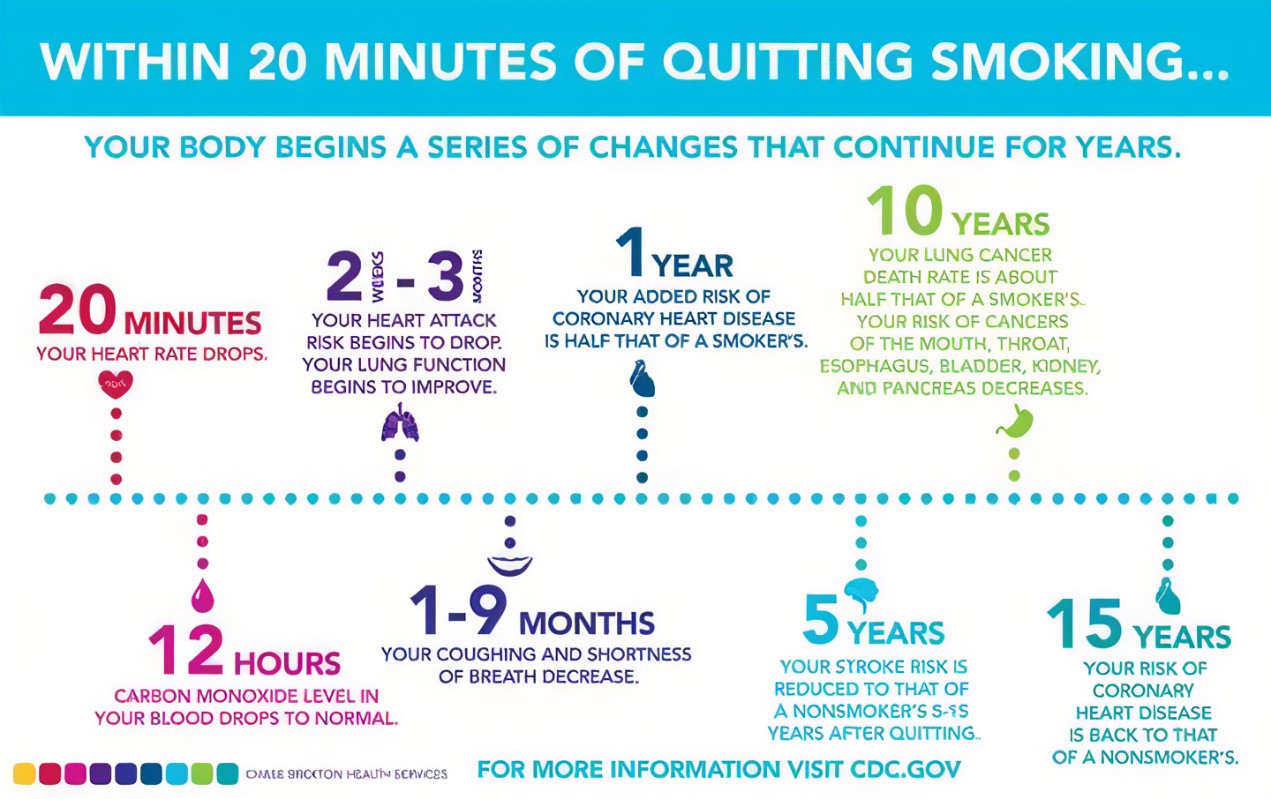
What happens to your body when you stop smoking?
- 20 minutes after you quit: Your blood pressure and pulse will start to return to more normal levels.
- 8 hours after: Within eight hours, your carbon monoxide levels will return to a more normal level.
- 24 hours after: By the one-day mark, you’ve already decreased your risk of heart attack, due to reduced constriction of veins and arteries as well as increased oxygen levels that go to the heart to boost its functioning.
- 48 hours after: Previously damaged nerve endings start to regrow. You may also start to notice that senses that were previously dulled due to smoking improve. You may realize you’re smelling and tasting things better than you were before.
Resources
Ready to quit smoking?
- Tennessee Tobacco QuitLine: For support in quitting, including free coaching, a quit plan, educational materials, and referrals to local resources, call 1-800-QUIT-NOW. You may also join the program online at www.tnquitline.org.
- Visit smokefree.gov for tools and tips regardless of where someone is at in their quit journey. If you are wanting to quit, recently quit or you quit a while ago, use this resource to help build your quit plan.
FAQ’s
KCHD has trained tobacco prevention specialists dedicated to help provide the support and resources you need, regardless of where you are at in your quit journey.
- There’s no getting around the fact that you’re going to experience nicotine withdrawal. It’s just what happens when your body is fighting its dependency on nicotine. But that doesn’t have to get in the way of your determination to quit smoking.
- First, know how to identify nicotine withdrawal symptoms. While nicotine withdrawal is different for everyone, some people may experience varying degrees - click here for tips.
Give us a call at 865-215-5170, and we can help direct you to tobacco prevention programs that are right for you.
- Vaping may have fewer toxic chemicals than tobacco cigarettes, but it is still not good for your health. Little is known about the long-term health effects of vaping.
- Whether in cigarettes or vapes, nicotine is highly addictive. And the amount of nicotine in many vaping products is much higher than in regular cigarettes. Side effects include reduced appetite, increased heart rate and blood pressure, nausea, and diarrhea.