
Tummy time plays a valuable role in helping your little one get a mighty start in life.
The American Academy of Pediatrics recommends you play and interact with your baby while they are awake and on their tummy 2 to 3 times a day for a short time (3 to 5 minutes).
You can start as early as the first day home from the hospital. And by 7 weeks, they recommend your baby play in a tummy time position for up to 15 to 30 minutes each day. This builds their strength to help reach important milestones like rolling, sitting up, crawling, and eventually walking.
They may hate tummy time at first because their back and neck muscles aren’t very strong yet so don’t give up! You can help develop these muscles by incorporating tummy time into their daily routine for a few minutes at a time, a few times a day and you will see that they tolerate it more and more.
To increase the likelihood of them enjoying tummy time, use different positions like the ones below from Healthychildren.org at times like after a diaper change or after a nap.

muscles

motor skills

& neck injury

development

opportunities


Begin tummy time in the hospital by placing your newborn on your chest or stomach while you’re reclined and awake, using a pillow for support. This helps your baby accept the position early and provides a perfect opportunity for bonding. Encourage eye contact, talk in animated tones, and use exaggerated expressions to engage your little one.


Place your baby tummy down across your lap, supporting their head and keeping it aligned with their body. If they fall asleep, move them to their bed on their back. For extra stimulation, gently raise and lower your legs together or move them side to side—this motion often calms babies.
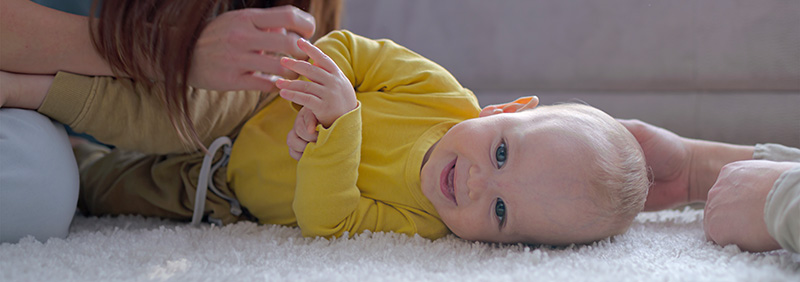

This is a good alternative if your baby doesn’t enjoy tummy time. Lay them on their side on a blanket, propping their back with a rolled towel if needed. Support their head with a small folded washcloth, keep both arms in front, and bring their legs forward with knees bent for comfort.
Distract your baby with a toy or read them a book during play. Set a regular time for tummy time and side lying, such as after naps, baths, or diaper changes, and vary their position every 10–15 minutes.
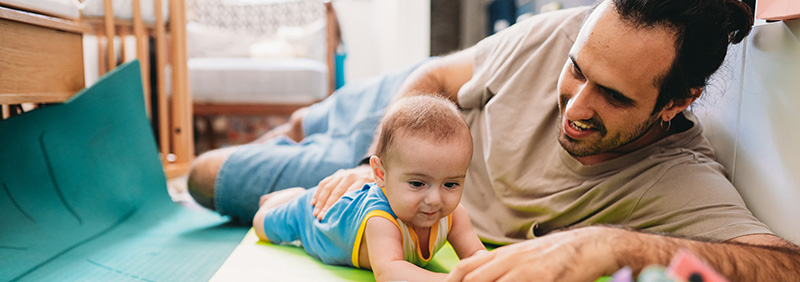

Toys can make tummy time more enjoyable and spark your baby’s curiosity. Choose items with different textures, colors, sounds, movement, or lights. A baby-safe mirror is also entertaining, as babies love seeing their reflection. You can even involve older siblings in supervised play—they’ll feel like “super siblings” and make tummy time easier for everyone.
Tummy to play, back to sleep!
Help your child reach milestones with play.
Play is not only important for children—it’s their job and its serious business. Encouraging play throughout each developmental stage can help them meet their milestones with ease so don’t underestimate its power!
Make your home safe for your little one.
It may feel overwhelming to think of all the things you need to do to keep your little one safe, especially if this is your first child. We are here to help you make some simple adjustments that will ensure your environment is safe for your little ones.
Frequently Asked Questions
If your baby has special care needs, was born premature or has acid reflux, you should follow your pediatrician's advice before trying tummy time.
Start with two to three times per day for three to five minutes at a time. As your baby grows, you can work up to 15-30 minutes each day.
You can use a tummy time mat or no toys at all! Try placing yourself, a baby-safe mirror, a rattle, or a building block just out of your baby's reach. This helps them get some exercise during tummy time and might even help your baby get used to it.